Hero Background
Arrow Left Back

Renewable Energy World – Making Vegetation Management A Strategic Priority

Renewable Energy World – Making Vegetation Management A Strategic Priority

Renewable Energy World highlights how making vegetation management a strategic priority helps utilities reduce outages, improve job site oversight, and implement technology-driven strategies for long-term operational savings. The article is authored by Glenn Wilson, a regional manager for ATK Energy Group, the parent company of Victory Powerline Services.

According to the U.S. Department of Energy’s Grid Deployment Office, “Vegetation-related impacts to the power system are the most common cause of power outages in the U.S., accounting for more than twenty percent of incidents.” For many utilities, vegetation management is at or near the top of their O&M spending. Florida Power & Light Company’s 2023-2023 Storm Protection Plan states the utility will spend about $77 million per year on managing vegetation across 16,400 miles of distribution lines. Utility executives owe it to themselves and their rate payers and members to adopt a strategic approach to vegetation management. 

“No one saves money on vegetation management by saving money on vegetation management,” says Dennis Fallon, executive director of the Utility Arborist Association. “Vegetation management needs to be thought of right out of the gate as one of the largest O&M line items for utilities across North America, maybe the world.” 

A Systemwide Approach to Utility Vegetation Management

To reduce outages and save money, utilities must fund utility vegetation management, UVM, programs with a focus on their system instead of tamping down emergent conditions. A systemwide approach would include: 

  • Funding consumer programs,  
  • Deploying the latest pruning strategies, and  
  • Increasing job site management. 

Consumer Outreach

A couple of years ago, an investor-owned utility partnered with the Arbor Day Foundation to offer 1,000 trees to customers. Among the reasons the utility gave on its website for the program was that selecting the wrong tree can result in significant pruning, removal, or serious electric service interruptions. The program was an example of spending to educate customers about vegetation affecting power from outside the rights-of-ways. 

Tech-enabled Strategies

Pruning strategies combined with technology like LiDAR, satellite imagery, A.I. and other software is also a lever for smartly deploying resources across a system. LiDAR can home in on areas where vegetation encroaches on conductors. Satellite imagery offers a wide-area view of dead or dying trees to help inspectors address hazards before they cause outages. The one-two punch puts crews where they’re needed most.

Job Oversight

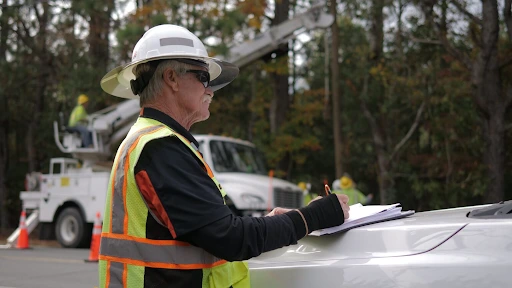
The U.S. military often refers to technology as an enabler, something that supports human efforts rather than replacing them. JSM enables the work of UVM crews, helping them stay on task and budget. JSMs are in the field to liaise between contractors and a utility’s project manager. A JSM is the project manager’s eyes in the field and someone who anticipates what a crew needs to stay on task and budget. 

“There’s always value in an independent review of anything,” notes Fallon. “If you have someone educated in vegetation management, who knows what confines the contractor, and understands the utility’s expectation, the extra eyes are valuable.” 

A job site manager helps a UVM program manage its O&M spending, which, ultimately, helps rate payers or co-op members avoid bigger bills. Experts agree overseeing a project is about spotting what crews do well and encouraging more of the same. But a JSM also keeps tabs on what crews don’t accomplish, so they improve. 

Cultivating Opportunities

Being strategic about UVM includes JSM (e.g., observing tree pruning), analyzing outage history, and investigating outages that could affect future practices and priorities. For instance, researchers analyzing circuits in North Carolina found that pruning the same section of line every three years versus four would reduce vegetation-related outages per month by 13 percent. A UVM team needs to go on the offensive by creating a strategy to secure funding and prove its worth. Armed with research, UVM program managers can show executives how, for example, putting crews into the field more frequently reaps benefits. UVM managers must have an exceptional understanding of outage history, whether that is outage frequency (SAIFI) or duration (SAIDI, CAIDI).  

“Tree management decisions don’t typically manifest in reliability for three to five years,” adds Fallon. “Vegetation management helps with SAIFI, so that’s a key metric.” 

Data of this kind is a foundation for the ROI of UVM. A UVM manager can tally up the cost per outage related to vegetation, especially outages outside normal business. They can then compare that to the price of proactively cutting a tree that LiDAR and JSM have identified as an imminent outage risk. With this data, managers can show the cost of delaying vegetation management.

Building a Case

The funding argument, in part, hinges on how much a utility avoids in costs by cutting a tree in 2025 and eliminating outages that tree likely will cause in 2025. While preventative maintenance has a cost, there is a countervailing cost avoidance. Putting a value on that offset is the UVM manager’s challenge.  

A University of Connecticut study comparing 13 years of pruning using an enhanced tree pruning program versus nearby untreated rights-of-way found “treated conductors had storm outage rates that were 35 to 180 percent lower than the service-area’s average annual outage rate for untreated conductors.” While managers may question spending $5,000 to remove a pine tree that hasn’t fallen on a conductor, a UVM manager can present a business case for preventing the damage versus spending after the pine does fall. First, there could be an outage that lasts, say, 36 hours if the tree falls on a weekend night. There’s the cost of bringing crews in after-hours and, potentially, as much as $5,000 per day for traffic control. In some states like New Jersey, a police officer would be required, adding more expense.  

Storm season can be a time for UVM managers to make a case for a systemic, technology-enabled strategy versus “hotspotting,” or targeted vegetation inspections and pruning of high-risk locations. With a systemwide strategy and oversight, crews can reduce the time they are called out for emergencies due to trees and limbs contacting feeders. For example, before switching to a systemwide vegetation management strategy, Minnesota’s Lake Region Electric Cooperative spent three times as much on hotspotting work. By switching to a systemwide UVM approach, the co-op’s cost-per-mile spending dropped from about $2,400 per mile to $500 per mile six years later. 

Being Opportunistic 

Selling the value of UVM requires vegetation management professionals who break down silos. They must cultivate good relationships across their organization. They must regularly meet with project managers to anticipate (and recommend) where UVM can play a strategic role. The alternative:  Wait for a call to step into the middle of a project on an emergent, tactical issue. 

For a utility to deploy a new UVM strategy, managers must take a preventative approach informed by oversight and regular reports documenting and photographing imminent threats. Technology can help inform a UVM strategy, but crews go into the field to do the work. And crews require JSM.  

Running an exceptional UVM program requires managers (and JSMs) who look for the next opportunity. When utilities have routine in-person or virtual meetings to discuss projects, UVM managers need to be there. When meeting participants and project managers mention key phrases (e.g., new construction, reconductoring, expansion, or acquiring new land), a UVM manager or JSM should speak up and explain the vegetation management component. 

“A vegetation manager needs to speak convincingly about the financial aspects of UVM,” reminds Fallon. “Utility leaders need to hear what they’re buying with vegetation management, whether that’s wildfire risk reduction or something else, and how vegetation management changes the utility’s risk profile.”

Source: renewableenergyworld.com

Let’s Build the Future of Energy Together