

 Back
Back
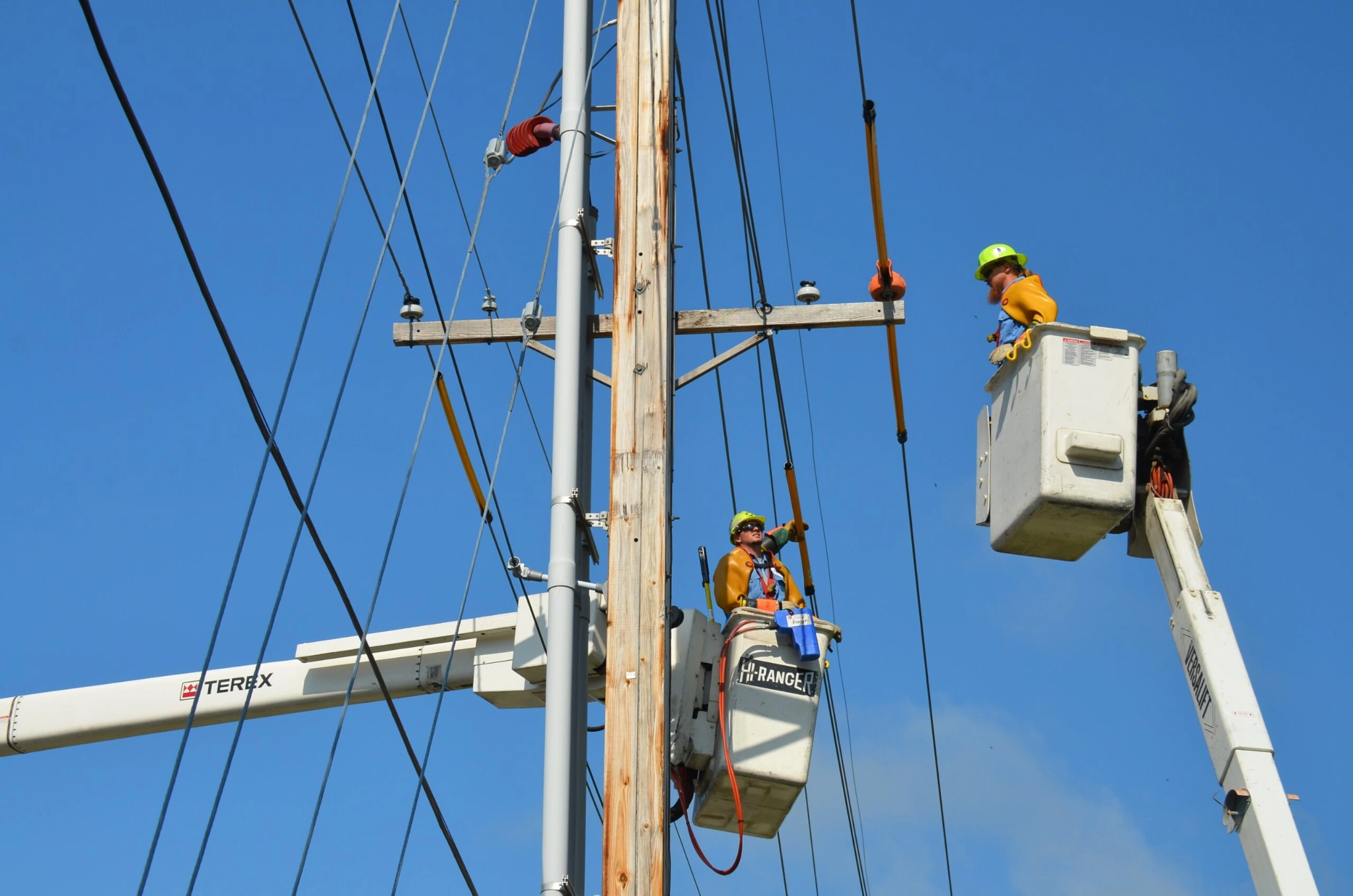
In this article Dan talks about the financial benefits utility companies can gain from tapping experienced job site managers to coordinate the work of designers, project managers, and crews in the field.
According to the U.S. Bureau of Labor Statistics, through 2033 there will be approximately 10,700 openings each year for line workers. Between building new housing developments and power requirements for a growing numbers of electric vehicles, utilities will have to construct more lines. New lines mean carrying out more maintenance. With the number of job openings for line workers growing at eight percent annually, utilities will keep counting on contractors for help.
Even with more contract crews to fill the gap, utilities still face challenges like footprint planning and achieving efficiency in construction. Overcoming these hurdles demands job site management. Whether a utility hires its own facilitators or relies on contractors, job site management’s goal is improving efficiency, reducing costs, meeting construction specifications, and ensuring safety.
The cost of overruns, go-backs, and decisions on-the-fly
When planning and oversight resources get stretched thin, several scenarios can unfold. Let’s say a utility assigns its contract crews a self-lay installation project like a two-pole rebuild. There are 200 manhours tied to the project, and the crews get paid for what they put in the air. Without job site management, the job could rack up 400 manhours. Multiply that scenario by dozens of crews, and a utility could spend hundreds of thousands, even millions, of dollars on overruns and go-backs. I know of a utility that budgeted $900,000 for a feeder project. Although the vendor ultimately delivered the project, lack of sufficient job site management meant the work cost the utility $3.5 million, or $2.6 million over budget.
In a perfect world, a utility would have plenty of employees as job site managers, or JSMs, in the field to liaise between the contractors and utility’s project manager. A JSM is the project manager’s eyes in the field and someone who anticipates what a crew needs to stay on task and budget. The JSM helps the utility manage its O&M spending as well as capital dollars, which, ultimately, help customers or co-op members avoid bigger bills.
Whether it’s restoration or make-ready work, contractor crews see their priority as getting a job done. Without enough JSMs in the field, a crew’s can-do attitude might have unintended, costly consequences for project managers. For example, instead of taking a couple of hours to trim a tree to get access to a pole, a contract crew without job site management might instead opt for putting down matting at a cost of $75,000.
Overseeing a project isn’t just about spotting what crews are putting in place. Job site management also keeps tabs on what crews don’t put up. By inspecting completed work, a job site manager can spot small spars, connectors, and fiberglass brackets that didn’t make it into place. A JSM making a final sweep of inventory at the end of a project can compare what a utility issued crews (e.g., cutout, brackets, anchor rods) and determine where these items are if not on the pole per specification. If crews aren’t putting all the required material on a pole, a JSM can check if the unused material went back to the service yard. Lost inventory like this can add up to $20,000 across multiple crews.
Consider traffic control for a job site. A job site manager must balance safety with saving costs. By visiting a job site, an experienced JSM can explain to an otherwise time-strapped crew how they can safely work without calling for flagmen they ultimately won’t use. With a daily rate for traffic control as high as $6.500, including three flagmen, the savings is meaningful. Or let’s say a utility has a 100-manhour job, and the traffic control piece is not in the design component. A savvy job site manager can point this out to the project manager who can put in a voucher for the job. This spares a contract crew from submitting a redline for traffic control and exceeding the budget. Situations like these are ones where a utility will see costs ballooning without planning and job site management.
Imagine a crew tasked with a resiliency project. With an experienced job site manager overseeing the project, the crew will be sure to get the material from the service yard that meets the utility’s specifications. Without planning, the crew might arrive at the yard only to find high-contamination insulators in stock. Forging ahead, the crew puts these insulators into the air despite working in an area that can accommodate a regular insulator. The difference in price between the salt-water-resistant insulator and regular model is about $250. Multiply that by the number of poles set, and the cost to the utility soars. Perhaps a crew working in a coastal area uses regular insulators because, again, there was a lack of planning. The insulators will eventually fail because of the salt air. That, too, costs money, because the resulting outage stops meters from spinning.
When planning gets short changed and a crew arrives without the right material, there’s a decision to be made in the field:
- a) leave the job and drive to another work site where the crew can accomplish the goal, or
- b) drive back to a service center, maybe a one-hour roundtrip, and get the right material.
In the latter case, imagine a five-man crew with two workers in a bucket truck, two in a digger, and a foreman in a pick-up. They lose four hours driving back to the service yard, unloading, loading, and returning to the job site. Let’s say that’s $55 per hour per worker for four hours, or a total of $1,100 lost.
Knocking down challenges by planning and overseeing work
For a $20 million distribution project, scenarios like the ones above can cumulatively cost hundreds of thousands of dollars. With dedicated job site management, whether its utility facilitators or qualified third parties, a project manager can eliminate these issues and save as much as $500,000 over the course of a project.
Contractors and subcontractors generally solve problems happening in real time. If they see a challenge accessing an asset, they may think nothing of calling on a crane to come to the site versus using mats to back their trucks up to the work to be done. But with dedicated planning and overseeing the site, utilities can eliminate the collective effect of making decisions on the fly and save themselves millions of dollars over the course of a year or major project.
A strategic JSM does more than look over a crew’s shoulder. An experienced JSM looks at the job and prepares the site for the crew. The JSM might visit the site a week early and see customer vehicles blocking access to the work area. By asking the vehicle owners to remove their vehicles before work begins, the JSM smooths the way for the contractor crew to arrive and begin work instead of waiting for someone to find the vehicle owners. Experienced contractors understand that a JSM helps the utility’s project manager and keeps the crew working efficiently and safely. A good JSM is an advocate as well as a coach who can make sure crews have exactly what they need.
Strategic job site management is as much a way of working as it is a mindset. It’s a shift in thinking from spending on the resources you may need to buying only the manhours and material you actually use. The need for dedicated planning and oversight extends to design work, too, because some utility design work gets pushed to subcontractors due to a lack of available designers and engineers. When that happens, a job site manager with the right experience can step in and review plans just before drawings and specifications go to the construction team. A JSM can meet with the utility’s design firm for a complete walk-down (i.e., a constructability review, including examining things point to point). During this walk-down, the JSM can offer suggestions for the design firm to correct items that will reduce redlines in the field. The JSM can also meet with the construction team to discuss traffic controls, vouchers, the correct units for the job, and if non-invasive equipment like vac trucks might be helpful.
Utilities often have some inspectors and JSMs on staff. But suppose the utility gets a new rider from its public utilities commission and adds 50 additional crews for several years of work. The utility may not hire additional internal inspectors and JSMs. Instead, to keep costs in check, the utility may end up stretching their internal department thin.
Bottom line: If a utility invests in experienced eyes in the form of native or contract JSMs, project managers and contractor crews can run jobs at the highest level of safety, efficiency and savings. That’s good for the utility and its customers or members.
Source: renewableenergyworld.com


