
 Back
Back

Renewable Energy World shares how Victory Powerline Services recently finished an oversight program for a U.S. investor-owned utility that achieved long-term cost savings and improved reliability by undergrounding distribution circuits as part of a grid-hardening initiative.
A recent grid hardening project in Florida has made the case for undergrounding distribution circuits not only as a grid hardening tactic, but as a long-term cost saving strategy given the location of poles and conductors on residential properties.
Victory Powerline Services recently finished an oversight program for a U.S. investor-owned utility that included recommending crews move approximately one mile of double-circuit overhead distribution to underground for improved reliability.
“This project originally called for hardening more than 50 poles and conductors located along the backlot of dozens of residential properties,” said John Wingfield, director of Field Operations for Victory Powerline Services. “Our job site manager worked with the project’s general foreman to build a case for using money earmarked for reliability improvements, which this work qualified for.”
Wingfield’s job site manager carried out multiple walk-downs with the general foreman. VPS calculated that the price of the original plan would have to include going onto each customer’s property with backlot machines and matting not only to harden the circuit but also for restoration when major events knocked out power. In each case, crews would have to navigate and work around fencing, sheds, landscaping, and more to harden the overhead distribution line.
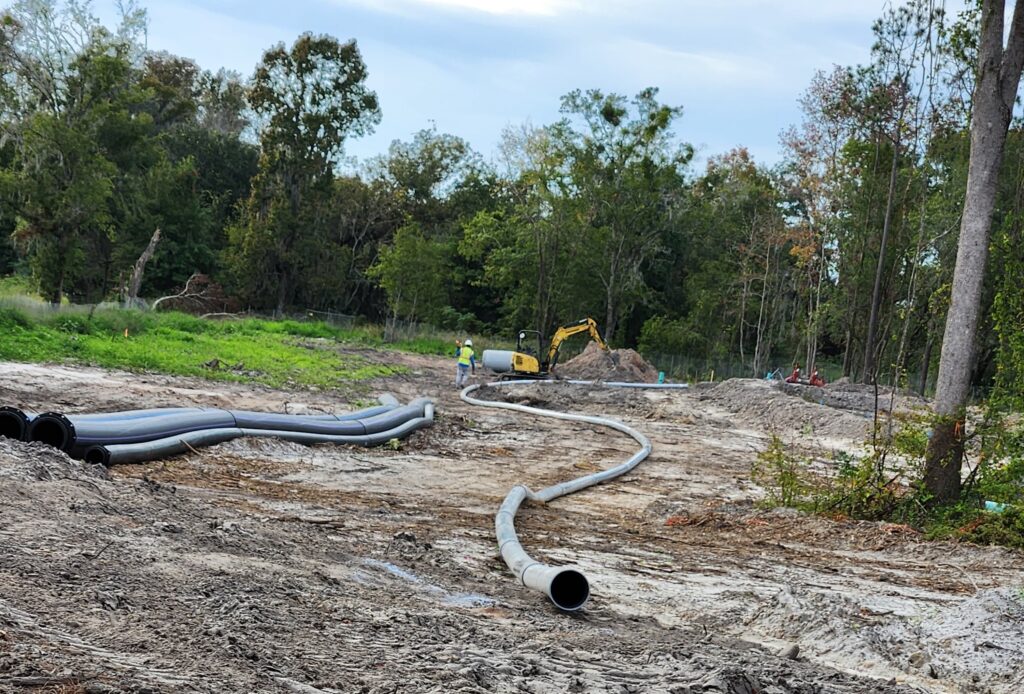
Crews have laid out 7-inch distribution pipe in preparation for boring a portion of the one-mile underground project (Credit: ATK Energy Group)
“We determined the overhead hardening costs would add up like interest on a loan, which made the underground approach ultimately more economical for the utility’s customers,” said Wingfield.
While the cost of using a horizontal directional drill and crews for two months exceeded the proposed overhead distribution plan, VPS argues the return on investment for the $1 million underground project is greater reliability for circuits in an area with a historically high number of outages.
By putting this circuit underground, the utility can save money it would otherwise spend on vegetation management and animal mitigation and the cost of maintenance offsets and outages can be reduced. According to industry estimates, putting a line underground that serves 50 customers would see a reduction in SAIFI ranging from 0.3 to 1.9 interruptions per customer per year.
Source: renewableenergyworld.com


